
How to Choose the Right Modified Starch for Your Needs


Modified starch has been used across industries for decades to support specific functional requirements where native starch alone may not be sufficient. For businesses operating in food, paper, textile, or other industrial segments, selecting the right modified starch is less about trends and more about performance, process compatibility, and consistency. Making the correct choice requires a clear understanding of application needs and supplier capabilities.
Understanding the Role of Modified Starch
Modified starch is produced by altering the physical or chemical properties of native starch to achieve defined functional outcomes. These modifications are carried out to improve characteristics such as viscosity, stability, binding strength, resistance to processing conditions, and performance under specific temperature or shear environments.
It is important to note that modified starch is not a replacement for native starch in every application. Instead, it is selected only when additional functional control is required. The decision to use modified starch should always be driven by application performance rather than availability or perception.
Assessing Your Application Requirements
Before selecting a modified starch, businesses must clearly define what they need the ingredient to achieve. This includes evaluating processing conditions, end-use performance, and quality expectations.
Key considerations include:
- Required viscosity and stability during processing
- Interaction with other ingredients
- Performance under temperature variation or mechanical stress
- Impact on final product appearance and consistency
Understanding these factors helps determine whether modification is necessary and, if so, what type of modified starch is appropriate.
Industry-Specific Use of Modified Starch
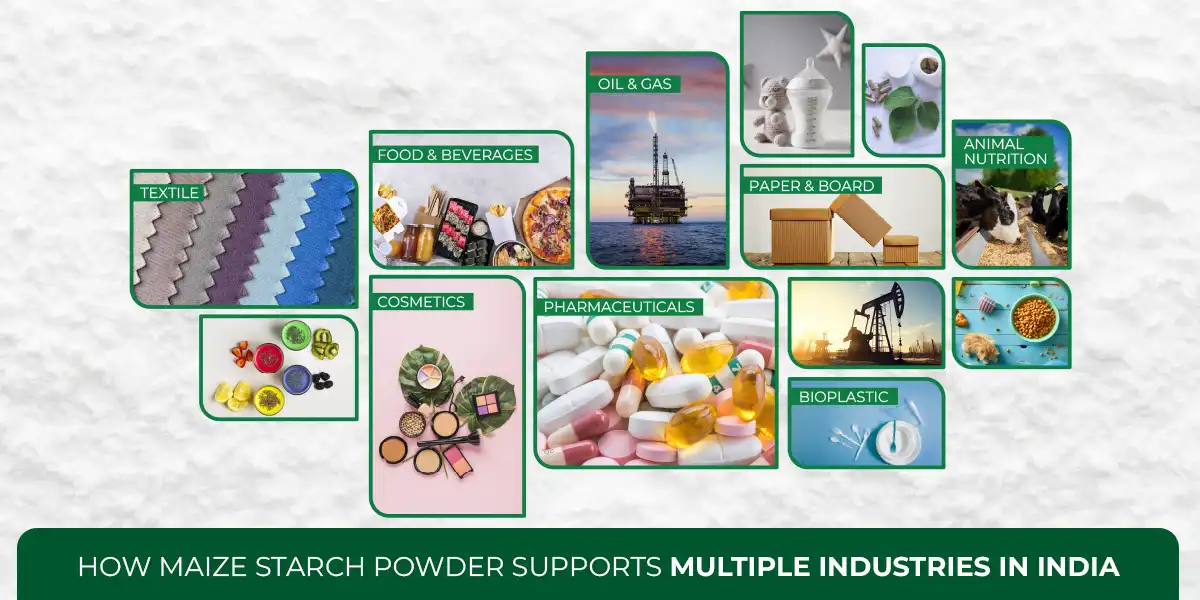
Different industries rely on modified starch for different reasons. In paper and textile applications, modified starch may be used to enhance surface strength, improve binding, or support controlled coating performance. In food-related applications, modification may help achieve better texture control or stability during processing.
In each case, the modification is targeted. Businesses should avoid selecting modified starch as a default option and instead evaluate whether it delivers measurable benefits over native starch for their specific use case.
Choosing Among Modified Starch Manufacturers in India
India has a wide base of starch producers, but not all are equipped to manufacture modified starch. When evaluating modified starch manufacturers in India, businesses should look beyond product lists and focus on technical capability.
Key factors to evaluate include:
- Ability to produce modified starch consistently
- Experience with specific industrial applications
- Process control and quality assurance systems
- Willingness to manufacture customized or made-to-order solutions
Manufacturers that understand application requirements are better positioned to recommend appropriate solutions rather than generic alternatives.
Role of a Modified Starch Supplier
A reliable modified starch supplier does more than deliver material. The supplier’s role includes guiding customers on whether modification is required, advising on suitable grades, and ensuring consistent performance across batches.
Suppliers with knowledge about the applications can help businesses avoid unnecessary confusion and complications by recommending native starch wherever necessary and modified starch for applications where it adds clear value. This approach is both performative and cost-efficient.
Balancing Performance and Practicality
One of the most important aspects of choosing modified starch is balancing functional improvement with operational practicality. Modified starch should solve a defined problem, such as process instability or inconsistent output. If it does not deliver a tangible benefit, its use may not be justified.
Businesses should work closely with suppliers to conduct trials, evaluate results, and confirm long-term performance before full-scale adoption.
Bluecraft Agro’s Approach to Modified Starch
Bluecraft Agro approaches modified starch with clarity and precision. As an experienced starch manufacturer, the company produces native starches for multiple industries and offers select modified starches primarily for paper and textile applications.
Modified starch production at Bluecraft Agro is typically application-driven and made to order, ensuring alignment with customer process requirements. This measured approach focuses on consistency, controlled volumes, and technical suitability rather than broad product claims.
Making an Informed Decision
Choosing the right modified starch requires a clear understanding of application needs, supplier capabilities, and performance expectations. Businesses that take a structured approach to selection are better positioned to achieve consistent results and long-term operational stability.
Modified starch continues to play a focused role in industrial applications, supporting performance where native starch reaches its limits. Its value lies in targeted functionality, not universal use.
Conclusion
The decision to use modified starch should always be guided by application-specific requirements and technical evaluation. By working with knowledgeable modified starch manufacturers in India and a dependable modified starch supplier, businesses can ensure that the selected solution delivers reliable performance without unnecessary complexity.
The right partnership enables informed decision-making, consistent quality, and practical outcomes aligned with real business needs.
If you are evaluating modified starch for your industrial applications in the paper and textiles segment, Bluecraft Agro’s technical team can help assess the right solution based on your process requirements.
Email: marketing@bluecraftagro.com
Call: 02717 454547
Contact Page: https://bluecraftagro.com/contact-us
Connect with Bluecraft Agro to discuss application-aligned starch solutions built on technical clarity and manufacturing expertise.