

The Role of High-Quality Starch in Bioplastic Manufacturing

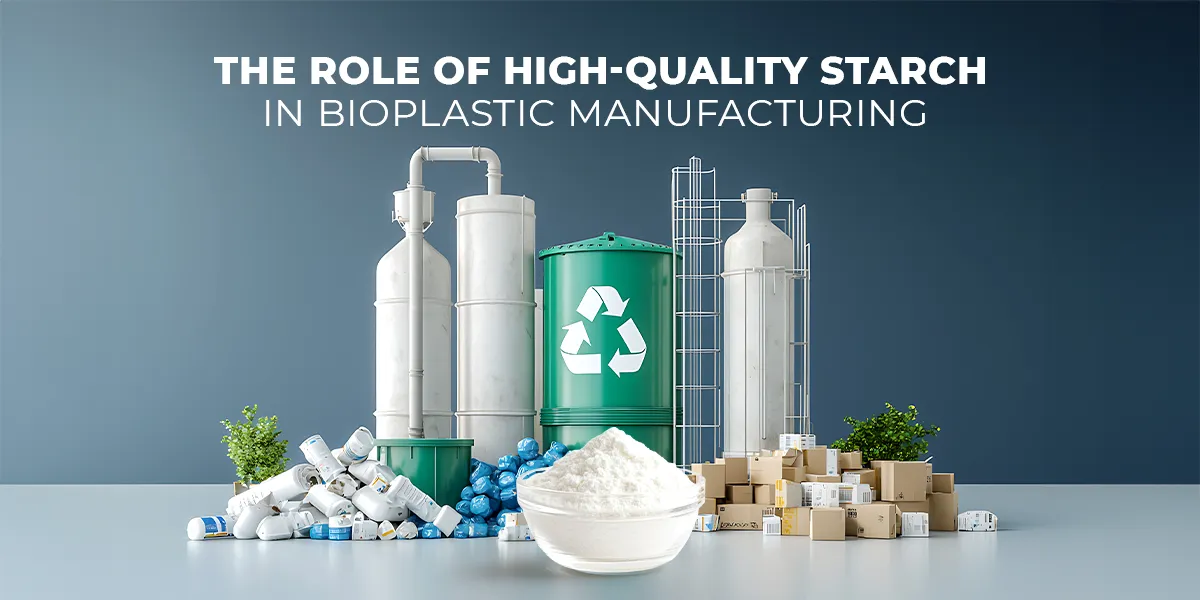
Bioplastics are gaining attention as industries explore alternative materials for packaging and product applications. While starch itself is not a new ingredient, its functional characteristics allow it to be used as a component in certain bioplastic formulations. In this context, the quality and consistency of starch supplied by experienced starch manufacturers become important for achieving predictable processing results and end-product stability.
Understanding the Use of Starch in Bioplastic Applications
Starch is valued for its film-forming ability, viscosity, and compatibility with other biodegradable polymers. When processed under controlled conditions, it helps support structural properties in specific types of bioplastic materials. Although starch alone does not create bioplastics, it can be blended with other components to form materials used in packaging, disposable items, and agricultural films.
Because bioplastic applications demand uniformity and controlled performance, manufacturers rely on starch grades with defined specifications. This requires consistency from the raw material supplier, making the role of an experienced starch manufacturer in India essential.
Importance of Quality and Uniformity
Bioplastic manufacturing depends heavily on repeatable performance. Variations in moisture level, granule size, viscosity, or purity can influence processing conditions and the characteristics of the final material. High-quality starch helps ensure that these parameters remain within acceptable ranges.
Starch supplied by a capable starch production company in India undergoes controlled processing and quality checks that help reduce inconsistencies. This enables manufacturers to work with predictable inputs and maintain stable output quality across batches.
Contribution of Starch to Bioplastic Characteristics
Starch supports several functional aspects in bioplastic formulations:
- Film Formation
Starch contributes to film formation when processed under controlled thermal conditions, enabling its use in flexible sheet and bag applications. Depending on the formulation and targeted mechanical properties, starch content can range from approximately 20% to 40% by weight, and may extend higher. The final percentage is determined by the required balance between flexibility, strength, and processing behavior.
- Compatibility with Other Polymers
Starch blends effectively with biodegradable polymers when processed under defined conditions. This compatibility allows manufacturers to develop materials that combine starch’s functional behavior with the mechanical or barrier properties of other components.
- Process Support
In certain formulations, starch helps manage viscosity and processing flow. Reliable viscosity behavior is important for extrusion and molding processes used in bioplastic production.
- Cost and Availability
Starch remains one of the more accessible raw materials for blending in specific bioplastic applications. This makes supply continuity and predictable specification control important factors in sourcing.
Role of a Starch Manufacturer in India’s Bioplastic Ecosystem
As bioplastic interest continues across packaging and industrial segments, the role of starch manufacturers becomes increasingly relevant. The manufacturer’s responsibility extends beyond supplying raw starch; it involves:
- Maintaining controlled production processes
- Providing defined specification sheets
- Ensuring batch consistency
- Understanding how the starch grade behaves during heating, blending, and processing
Since bioplastic formulations are sensitive to raw material variations, manufacturers evaluate detailed specification sheets before selecting a supplier. A reliable starch production company in India ensures stability in parameters such as moisture content, particle size, whiteness, pH, and viscosity.
Application-Aligned Starch Grades
Not all starch grades are suitable for bioplastics. Depending on the formulation, manufacturers may require starch with particular functional properties or specific moisture and granule characteristics. The supplier's ability to offer grades aligned with these requirements is an important factor in maintaining processing efficiency.
Bluecraft Agro provides starch grades selected for their consistency, clarity of specifications, and suitability for blending in defined bioplastic applications. While starch is a commodity ingredient, consistent production practices help support predictable performance.
Bluecraft Agro’s Approach to Supplying Starch for Bioplastics
As an established starch manufacturer in India, Bluecraft Agro focuses on supplying starch with controlled quality parameters suitable for multiple industrial segments, including select bioplastic applications. The company prioritizes:
- Stability in key specifications
- Transparent communication of grade characteristics
- Controlled production processes
- Alignment with customer requirements
Rather than overstating claims about bioplastics or sustainability, Bluecraft Agro maintains a practical approach centered on the quality and consistency of the starch it produces.
Practical Considerations for Manufacturers
In bioplastic production, starch is evaluated based on its ability to perform reliably within a defined formulation. Manufacturers typically assess specification sheets, conduct trials, and validate batch consistency before deploying the starch in extrusion or molding processes.
A dependable supplier helps ensure that raw material characteristics remain stable, reducing the need for frequent adjustments in processing conditions.
Conclusion
Starch continues to play a functional role in specific bioplastic formulations due to its film-forming behavior and compatibility with other biodegradable polymers. As interest in bioplastic materials grows across industries, manufacturers increasingly depend on high-quality starch sourced from reliable starch manufacturers.
Bluecraft Agro, as a trusted starch production company in India, supports these requirements by offering starch grades with controlled specifications and consistent performance. With structured manufacturing practices and application awareness, the company contributes to the stability and reliability that manufacturers seek when working with starch in bioplastic applications.
For application-specific starch requirements or detailed technical information, connect with Bluecraft Agro.