

Starch in Food: Everyday Products That Contain This Hidden Ingredient

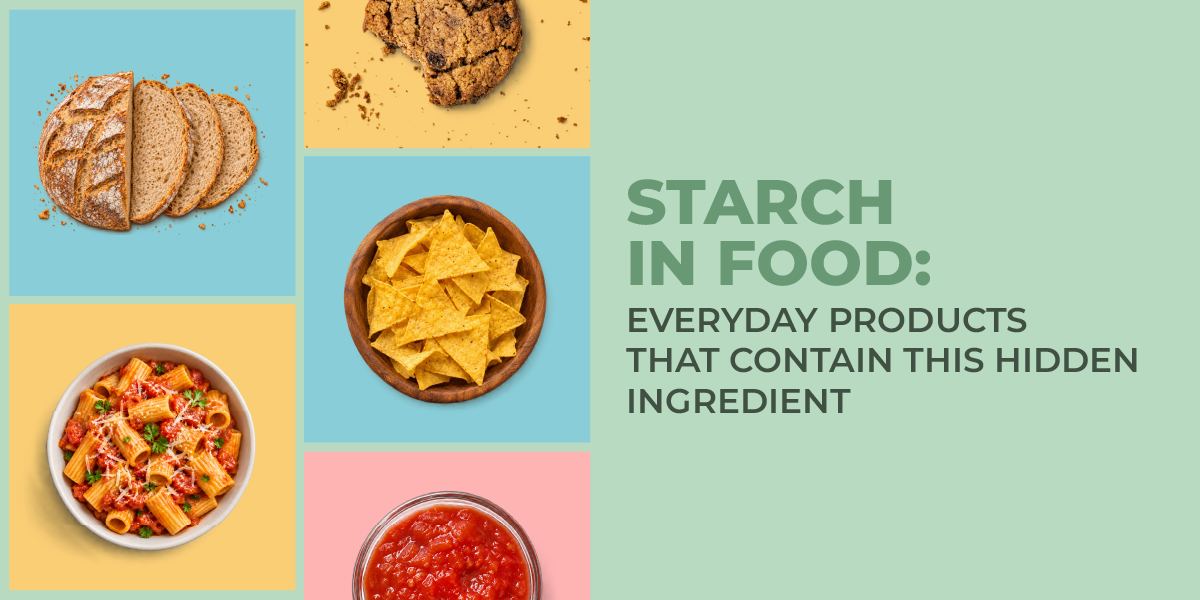
Sauce that loses its consistency, a bakery filling that releases moisture, or a dessert with an uneven texture can affect the quality of a finished food product. These challenges often relate to how ingredients behave during processing, cooling, and storage. Starch in food plays a functional role in controlling these characteristics.
Although starch occurs naturally in cereals, potatoes, and other crops, refined food-grade starch is also incorporated into manufactured products for specific purposes. From soups and confectionery to dairy products and baked goods, starch contributes to texture, viscosity, binding, and structure.
Understanding starch in everyday food reveals how this familiar ingredient supports numerous food manufacturing applications.
Why Is Starch Used in Food Manufacturing?
Food manufacturers use starch for its ability to interact with water and develop structure under specific processing conditions.
When native starch is heated in sufficient water, its granules absorb moisture and swell, increasing viscosity. Depending on the starch type and formulation, cooling can further influence gel formation and texture.
The main functional properties include:
- Thickening: Develops viscosity in soups, sauces, and gravies.
- Binding: Helps hold ingredients together in processed foods.
- Gel formation: Provides structure to puddings and certain confectionery products.
- Texture development: Contributes to softness, firmness, or smoothness.
- Coating: Supports batter adhesion and surface characteristics in prepared foods.
These properties explain the extensive starch applications in food industry operations.
Everyday Food Products That Contain Starch
Sauces, Gravies, and Soups
Starch provides body and consistency in sauces, gravies, and prepared soups.
During cooking, starch granules gelatinise and increase the viscosity of the liquid mixture. This helps produce the desired thickness and flow characteristics.
In instant soup formulations, specially processed starches may provide rapid viscosity development during reconstitution.
Bakery Products and Cake Fillings
Bread, cakes, biscuits, and pastries contain starch naturally through flour. Refined starch may also be added to achieve particular formulation characteristics.
In bakery applications, starch contributes to crumb structure and texture development during baking.
In custard fillings and fruit preparations, it acts as a thickening agent, controlling consistency and helping retain moisture within the filling.
Puddings and Dairy Desserts
Starch is used in custards, puddings, flavoured dairy desserts, and selected ice cream formulations.
It contributes to viscosity, texture, and gel formation, depending on the formulation.
Modified starches may also be used where processing conditions require particular stability characteristics.
The interaction between starch, milk proteins, sugars, and water determines the final texture of these products.
Confectionery Products
Starch serves several functions in confectionery manufacturing, particularly in gel-based sweets and formulated fillings.
It contributes to gel structure, firmness, and texture. Certain confectionery processes also use starch moulding systems to form shaped products.
Starch selection influences the setting characteristics and finished consistency of individual formulations.
Snacks and Coated Foods
Starch is incorporated into batters, coatings, extruded snacks, and certain processed savoury products.
In batter systems, it contributes to coating structure and adhesion. During frying, starch undergoes changes that influence the texture of the finished coating.
In extruded products, starch gelatinisation and expansion contribute to the development of characteristic snack structures.
Salad Dressings and Prepared Condiments
Salad dressings and condiments require controlled viscosity to maintain their intended flow and texture.
Suitable starch ingredients provide thickening and can support formulation stability.
Depending on the product, pregelatinized or modified starch may be incorporated into preparations that do not undergo conventional cooking.
Gluten-Free Food Products
Maize starch is used in various gluten-free formulations, including bakery products, snack foods, and prepared mixes.
It provides a carbohydrate base and contributes to texture development.
However, starch alone cannot reproduce the structural functions of gluten. Gluten-free formulations commonly combine starch with proteins, hydrocolloids, or other functional ingredients.
Native and Modified Starch in Food Products
Different starch ingredients in food products serve different processing requirements.
Native maize starch retains its original granular structure following extraction and refining. It is used in applications requiring conventional thickening, binding, and gel formation.
Modified starch undergoes controlled processing to alter particular functional characteristics. Depending on the modification, it may provide improved stability under heating, mechanical shear, acidity, or refrigeration.
Each grade’s functional behaviour depends on its composition, processing method, and intended application.
Bluecraft Agro’s Role in Food-Grade Starch Manufacturing
Bluecraft Agro manufactures food-grade maize starch for food processing applications.
It supplies maize-derived starch as a white to creamy powder for use in sauces, confectionery, bakery products, canned foods, and other formulations.
The company’s food-grade starch portfolio supports applications involving thickening, binding, and texture development.
Product specifications and functional requirements remain central to its use in different manufacturing processes.
Conclusion
Starch contributes to the consistency, structure, and texture of numerous everyday food products. Its functions extend across sauces, bakery products, dairy desserts, confectionery, snacks, and prepared foods.
Bluecraft Agro supplies maize-based food-grade starch for these applications.
Explore Bluecraft Agro’s food-grade starch range or contact our team for product specifications and application-related enquiries.
Frequently Asked Questions
What everyday foods contain starch?
Bread, cakes, biscuits, sauces, soups, puddings, confectionery, and snacks commonly contain starch, either naturally or as an added functional ingredient.
Why is starch added to processed foods?
It provides thickening, binding, viscosity control, gel formation, and texture development, depending on the food formulation.
Is maize starch used in dairy products?
Yes, maize starch is used in certain puddings, dairy desserts, and ice cream formulations to influence viscosity and texture.
What is the difference between native and modified food starch?
Native starch retains its original structure. Modified starch is processed to achieve specific functional characteristics under different manufacturing conditions.
Can maize starch be used in gluten-free foods?
Yes, pure maize starch is naturally gluten-free and is used in gluten-free formulations. Appropriate ingredient sourcing and contamination controls remain necessary.